Matched equipment and capacity basis
Toronto furnace replacement
Furnace Installation and Replacement Toronto
A furnace replacement is an installed-system project, not a box swap. The proposal should connect heat requirement with airflow, distribution, venting, condensate, fuel, electrical, controls, permits and startup. Reusing an old capacity or choosing only by an efficiency label can leave the original comfort problem unchanged.
TORONTO HVAC SERVICECONDITIONSYSTEMSCOPE
Furnace installation assessment
What a furnace installation visit should evaluate
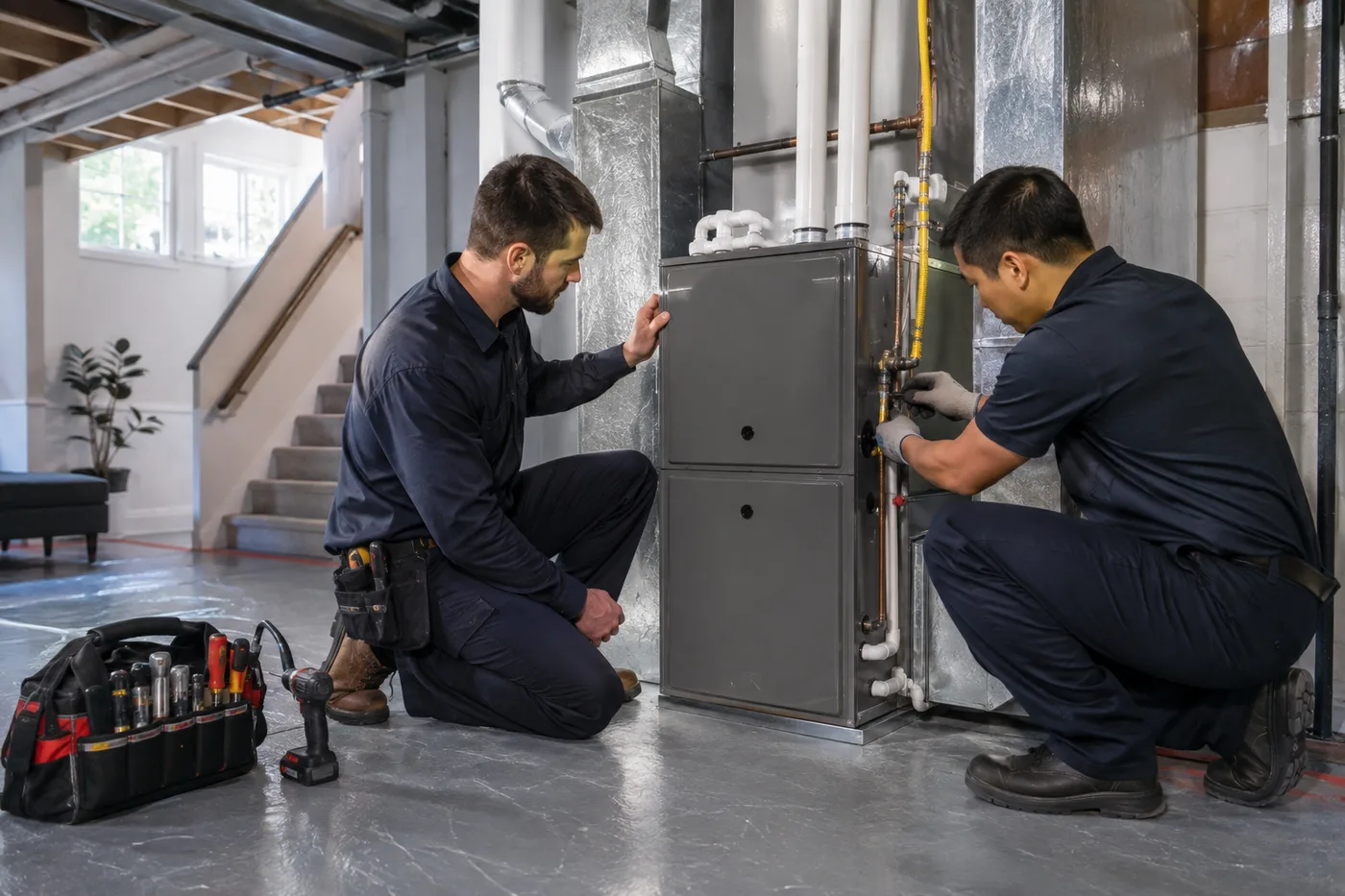
Furnace replacement planned around heat loss, airflow, venting, fuel, controls, access and commissioning. The assessment begins with the reported condition and the installed configuration. A code, sound, temperature complaint or equipment label is evidence that selects a test path; it is not a diagnosis by itself.
The technician should identify what the thermostat or building control requested, which equipment stages responded, how heating or cooling moved through the system and whether the complaint can be reproduced. If the weather, building mode or intermittent condition prevents a complete test, the limitation should be recorded rather than hidden behind a confident guess.
- Existing failure and repair history
- Heat-loss and building-change context
- Duct pressure, return and supply capability
- Fuel, venting, condensate, electrical, control and access
Each check has a purpose. The proposal should connect measurements and observations to the original symptom, then explain whether a safety or fault is primary or protecting the equipment from another condition.
Written Toronto HVAC scope
What the furnace installation proposal should define
A professional scope identifies the equipment, verified condition and work intended to correct it. It separates diagnosis from repair, routine maintenance from discovered problems and urgent restoration from optional improvement. Parts or equipment names alone do not reveal access, related correction, testing or exclusions.
Removal, transitions, venting, drain, controls and electrical coordination
Permit and inspection responsibility
Startup, commissioning and written records
The written proposal should also state taxes, deposits, permit responsibility where applicable, property protection, disposal, change authorization and the conditions that could alter price. Warranty wording belongs to the actual legal business and should distinguish manufacturer coverage from workmanship terms.
Repair, coordinate or replace
Toronto HVAC decisions after the condition is verified
The right next step depends on evidence and the customer’s objective. A repair can restore operation while distribution or building work remains separate. Replacement can be reasonable when condition, support, matching and ownership plans justify it, but age or a single fault does not decide the project alone.
Repair the existing furnace when supportable
Ask which finding supports this path, what is included and how the result will be checked.
Replace within the existing system strategy
Ask which finding supports this path, what is included and how the result will be checked.
Coordinate furnace and heat pump as a hybrid system
Ask which finding supports this path, what is included and how the result will be checked.
When another qualified party controls fuel, electrical distribution, roofing, plumbing, structure, environmental testing or a common building system, that boundary should be named before authorization. Coordination is part of a clear project; it should not appear as a surprise after work begins.
Toronto property context
How Toronto buildings and seasons affect furnace installation
Older Toronto houses, narrow basement stairs, finished mechanical rooms and masonry vent routes can change installation. Qualified scope and permit responsibilities must be clear before work.
Toronto service planning also considers winter access, humid cooling conditions, equipment location and the difference between owner-controlled and building-controlled systems. The neighbourhood name never replaces the exact postal code, property details and real operating coverage.
Before the visit
Prepare a more useful Toronto HVAC service request
Good information helps route the correct visit without encouraging unsafe inspection. Collect only what can be seen or recorded without removing panels, entering unsafe spaces or changing the system repeatedly.
- Provide renovation, insulation and comfort history
- Identify ownership horizon and noise/filtration priorities
- Collect current model, fuel and utility information
For condos, rentals and managed properties, add unit/buzzer information, equipment location, parking or loading instructions, elevator and service-hour rules and the person authorized to approve work. For an intermittent condition, keep a timeline with weather, thermostat mode and rooms affected.
Service boundaries
What this Toronto HVAC page does not promise
Clear limits prevent a useful information page from becoming an invented warranty, diagnosis or dispatch promise. Current credentials, emergency availability, response times, prices, financing, rebates and manufacturer relationships must be verified for the operating company before publication.
- Efficiency savings are not promised without defensible assumptions
- TSSA and technician credentials must be verified
- Financing, rebates and warranties require current terms
Furnace installation questions
Frequently asked questions about furnace installation
Can a new furnace use the old size?
The old capacity is context, not proof. Load, ducts and building changes should be reviewed.
What should a furnace quote include?
Equipment, transitions, venting, drain, fuel/electrical work, controls, permits, commissioning and warranty.
Should the AC be replaced at the same time?
Not automatically. Matching, condition, refrigerant and project goals determine combined work.
Request furnace installation
Send the Toronto postal code, system and condition.
The operating team must confirm coverage, timing, qualifications and the correct visit type.