Reproduce or document the reported condition
Toronto HVAC problem
Heat Pump Icing or Not Switching Modes in Toronto
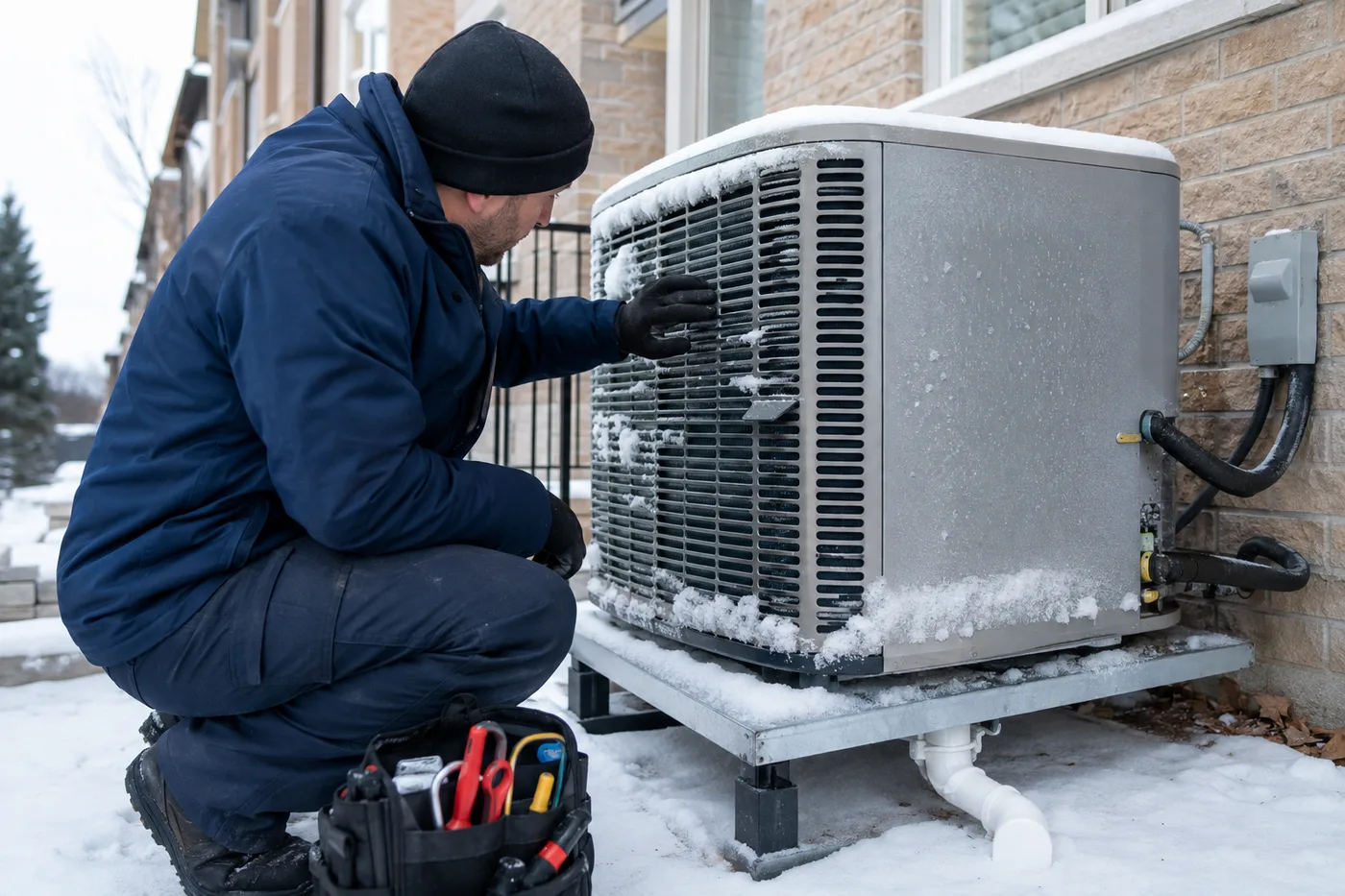
Heat pumps can collect frost and enter defrost during heating. The question is whether the system clears normally, drains safely and returns to heat, or accumulates persistent ice, loses capacity or fails to change modes. The model, weather and backup strategy shape the answer.
TORONTO HVAC PROBLEMCONDITIONSYSTEMSCOPE
Heat pump ice or mode issue assessment
What to evaluate when heat pump ice or mode issue is reported
Heat pump frost, defrost and mode-change problems separated from normal cold-weather operation. The assessment begins with the reported condition and the installed configuration. A code, sound, temperature complaint or equipment label is evidence that selects a test path; it is not a diagnosis by itself.
The technician should identify what the thermostat or building control requested, which equipment stages responded, how heating or cooling moved through the system and whether the complaint can be reproduced. If the weather, building mode or intermittent condition prevents a complete test, the limitation should be recorded rather than hidden behind a confident guess.
- Outdoor conditions and frost pattern
- Defrost initiation, termination and sensors
- Reversing/control response
- Airflow, drainage and refrigeration evidence
Each check has a purpose. The proposal should connect measurements and observations to the original symptom, then explain whether a safety or fault is primary or protecting the equipment from another condition.
Written Toronto HVAC scope
What the Toronto HVAC diagnosis and repair scope should define
A professional scope identifies the equipment, verified condition and work intended to correct it. It separates diagnosis from repair, routine maintenance from discovered problems and urgent restoration from optional improvement. Parts or equipment names alone do not reveal access, related correction, testing or exclusions.
Test the relevant operating sequence and distribution
Explain the verified finding and options
Verify the original symptom after authorized work
The written proposal should also state taxes, deposits, permit responsibility where applicable, property protection, disposal, change authorization and the conditions that could alter price. Warranty wording belongs to the actual legal business and should distinguish manufacturer coverage from workmanship terms.
Repair, coordinate or replace
Toronto HVAC decisions after the condition is verified
The right next step depends on evidence and the customer’s objective. A repair can restore operation while distribution or building work remains separate. Replacement can be reasonable when condition, support, matching and ownership plans justify it, but age or a single fault does not decide the project alone.
Correct a control, sensor or defrost condition
Ask which finding supports this path, what is included and how the result will be checked.
Restore airflow, drainage or refrigerant performance
Ask which finding supports this path, what is included and how the result will be checked.
Review placement and snow/ice management
Ask which finding supports this path, what is included and how the result will be checked.
When another qualified party controls fuel, electrical distribution, roofing, plumbing, structure, environmental testing or a common building system, that boundary should be named before authorization. Coordination is part of a clear project; it should not appear as a surprise after work begins.
Toronto property context
Toronto building and seasonal factors behind heat pump ice or mode issue
Toronto snow, drifting, freezing rain and defrost water can affect an outdoor unit. Clearance and drainage need to match the installed model and site.
Toronto service planning also considers winter access, humid cooling conditions, equipment location and the difference between owner-controlled and building-controlled systems. The neighbourhood name never replaces the exact postal code, property details and real operating coverage.
Before the visit
Prepare a more useful Toronto HVAC service request
Good information helps route the correct visit without encouraging unsafe inspection. Collect only what can be seen or recorded without removing panels, entering unsafe spaces or changing the system repeatedly.
- Record when the symptom appears and the thermostat state
- Identify the system and affected rooms
- Do not remove equipment panels or bypass a safety
For condos, rentals and managed properties, add unit/buzzer information, equipment location, parking or loading instructions, elevator and service-hour rules and the person authorized to approve work. For an intermittent condition, keep a timeline with weather, thermostat mode and rooms affected.
Service boundaries
What this Toronto HVAC page does not promise
Clear limits prevent a useful information page from becoming an invented warranty, diagnosis or dispatch promise. Current credentials, emergency availability, response times, prices, financing, rebates and manufacturer relationships must be verified for the operating company before publication.
- A symptom does not prove one failed part
- Remote information routes a visit but does not replace testing
- Safety and credential boundaries apply to the actual equipment
Heat pump ice or mode issue questions
Frequently asked questions about heat pump ice or mode issue
Is steam during defrost normal?
It can be normal as frost melts and moisture meets cold air. Persistent burning smell or electrical symptoms are different.
Should I remove ice myself?
Do not chip or heat the coil. Keep safe manufacturer-required clearance and request service for persistent ice.
Why will the heat pump cool but not heat?
Reversing, controls, defrost, airflow, refrigeration or backup-heat configuration may be involved.
Request heat pump ice or mode issue
Send the Toronto postal code, system and condition.
The operating team must confirm coverage, timing, qualifications and the correct visit type.